
Beauty and the Beast story
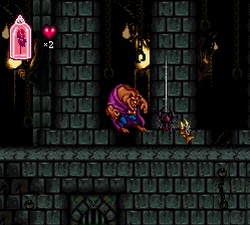
The story of Beauty and the Beast on SNES didn’t start in a studio; it started in a movie theater, when Disney’s Beauty and the Beast lit up the screen—warm candle glow, a crystal balcony, and Alan Menken’s very first note. Players back then lived to the beat of the 16‑bit era, and it felt almost inevitable that the fairy tale would jump from film reel to cartridge. That’s how Disney’s Beauty and the Beast arrived on Super Nintendo—the one we knew by a dozen names: Disney’s Beauty and the Beast on SNES, the Belle-and-Beast game, the cart you slid into the gray console and listened for that satisfying click of the latch.
From film to cartridge
Early ’90s Disney was hitting its stride—new-wave animation, songs that stick for years, and that fine line between children’s tale and grown-up feeling. Turning Belle and the cursed prince into a living-room game took taste more than tech. The Japanese team at Hudson Soft—masters of licensed games—nailed the tone. They didn’t try to retell the movie beat for beat; they bottled its breath: a half-lit castle, a forest where the snow crunches, the enchanted rose slowly shedding petals, and that rising weave of melodies, Menken’s themes lovingly revoiced in 16‑bit. Every frame nods to the film, and every jump reminds you this is a movie tie-in that actually feels like a game, not a dry screenplay dump.
On paper it’s “just” a side-scrolling platformer, but there’s room here for story. Beauty & the Beast never rushes you: it gives you space to breathe, to linger on stained glass, to wander corridors where the ball’s echo still hangs in the air. You recognize scenes without prompts—the winter woods with wolves, the evening snow that swirls in the wind, and the road to the finale where Gaston’s shadow rises. That’s why the SNES cartridge has its fans: you don’t move level to level so much as feeling to feeling, and the playthrough unfolds like a small trip through a familiar fairy tale.
How it found its way to us
Disney’s Beauty and the Beast spread quietly but steadily—the way respectful adaptations do. Magazines of the day were shouting about The Lion King and Aladdin, while this one kept to its lane, leaning on recognition, atmosphere, and music. In plenty of places the Super Nintendo was a rare bird, which only made those encounters sweeter: a weekend rental here, a classmate’s import there. The game drifted from home to home on cartridges with mismatched covers, sometimes with goofy stickers where Belle might be pasted in front of the wrong castle. For many, it was a first tidy Disney platformer on the Super NES: no mean-spirited difficulty spikes, but plenty of character.
And truly, everyone’s Beauty and the Beast SNES playthrough was a little different. Someone got stuck in the snowy setpiece, someone spent weeks shoulder-checking walls for secrets in the halls, someone kept coming back just for the music—to hear how the 16‑bit arrangement gently quotes the familiar themes. And no matter how often magazines printed that final showdown with Gaston, seeing it yourself hits different. Screenshots are one thing; it’s another to stand on a ledge with the pixel wind howling, the rose almost out of miracles, and the whole story hanging on you.
Time, of course, reshuffled everything. By the 2000s, players who grew up on other consoles found it through emulators, preserved ROMs, retro reviews, and a rediscovered OST. First it’s “okay, an hour,” then suddenly it’s late: “one more try and I’ll get there.” Searches for “how to beat Gaston,” “castle secrets,” and “Beauty and the Beast SNES soundtrack” still pop up in browser histories—not about raw difficulty, but about wanting to hear the stairs creak again, to feel that heavy stride again. That’s the old magic of a movie game: you return less for mechanics than for a moment you remember being happy in.
Why it stuck
It’s gentle. That’s the best compliment for Beauty and the Beast on Super Nintendo. No gaudy tricks—just tone. You believe in the Beast’s weight, the punch of his roar, the restrained tenderness when things finally fall into place. It’s a game you enter with warmth, not a stopwatch; not to squeeze out the perfect speedrun, but to live through a story. Which is why it’s easy to recommend to anyone chasing atmosphere as much as challenge: the best retro SNES games don’t last on nostalgia alone—they endure on feeling. In Disney’s Beauty and the Beast, that feeling lives in every detail, from the shadows across stonework to the sway of the rose in its glass case.
Funny thing: the Belle-and-Beast cartridge didn’t stick as “just another license,” but as a quiet little island people sail back to for some peace. When you want to tidy up your day, you catch yourself thinking: I could really run the castle from gate to rooftop again, to music where you can hear the echo of a ball and the rustle of petals. And honestly, that’s when you see why it slid so confidently onto that golden shelf of favorites—no chest-beating, no hard sell, just a game that knows how to speak the language of emotion.
And yeah, we still call it all sorts of things in conversation—Beauty and the Beast on SNES, Disney’s Beauty and the Beast, “the Beast game”—and each name seems to tuck away its own layer of memories. Whatever you call it, this is one of those stories where the pixels stand up to time. People didn’t love it for marketing; they loved the mood, which in our little retro-gaming corner is what matters most. So when a chat bubbles up with “walkthrough,” “ending,” or “soundtrack,” it doesn’t sound like a hunt for instructions—it’s a way back into that hall of stained glass and candles, where player and fairy tale first met.